How to Choose the Right Insole Material for Different Markets
EVA vs PU vs Gel vs TPE Explained for B2B Buyers
Choosing the right insole material is one of the most critical decisions for footwear brands, distributors, and footcare product buyers.
While many suppliers focus on price alone, experienced B2B buyers know that material selection directly impacts product performance, market positioning, and long-term reorder stability.
This guide explains the key differences between EVA, PU, Gel, and TPE, and how to select the right material based on target market, usage scenarios, and business goals.
Why Insole Material Choice Matters in B2B Sourcing
For B2B buyers, an insole is not just a component—it is part of a system that affects:
- End-user comfort and performance
- Product return rates
- Brand reputation
- Long-term supply consistency
Selecting the wrong material often leads to:
- Inconsistent cushioning
- Premature compression loss
- Seasonal performance issues
- Higher warranty or replacement costs
Understanding material behavior helps buyers avoid these risks before production begins.
EVA Insoles: Lightweight & Cost-Efficient for High-Volume Markets
Best for:
Sports footwear, casual shoes, entry-level orthotic insoles
Key characteristics:
- Lightweight and flexible
- Easy to mold and scale in production
- Cost-efficient for large-volume programs
Advantages for B2B buyers:
- Ideal for price-sensitive markets
- Fast production cycles
- Stable sourcing for mass retail
Limitations:
- Lower durability under long-term compression
- Less suitable for heavy-duty or medical use
Typical use cases:
- Sports & daily-use footwear
- Promotional or seasonal product lines
PU Insoles: Long-Term Comfort & Structural Stability
Best for:
Work boots, standing-intensive jobs, mid-to-high-end orthotic programs
Key characteristics:
- Superior cushioning retention
- Breathable open-cell structure
- Better rebound over time compared to EVA
Advantages for B2B buyers:
- Reduced customer complaints due to compression loss
- Suitable for long-term wear scenarios
- Consistent performance across batches
Limitations:
- Higher material cost than EVA
- Slightly heavier weight
Typical use cases:
- Industrial & safety footwear
- Orthotic and comfort-focused programs
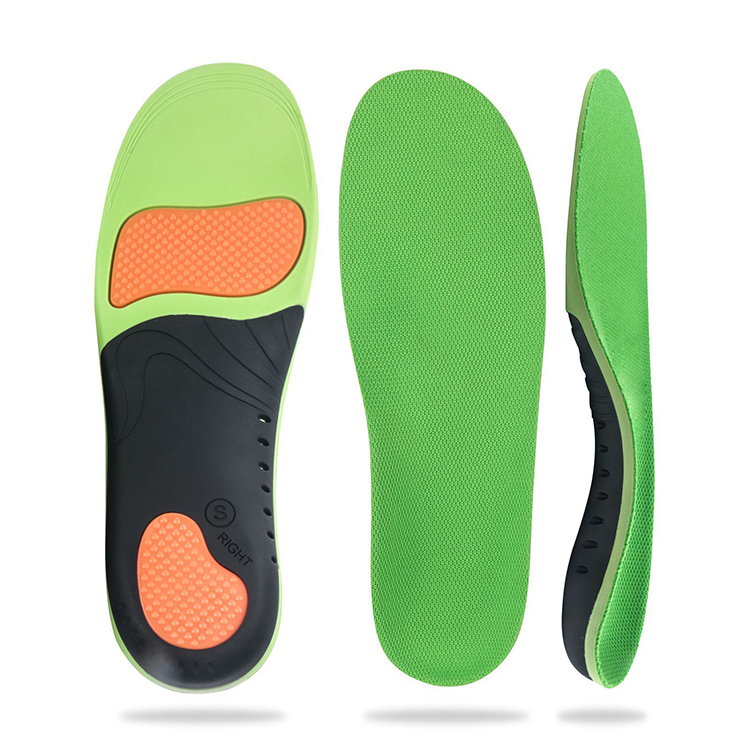
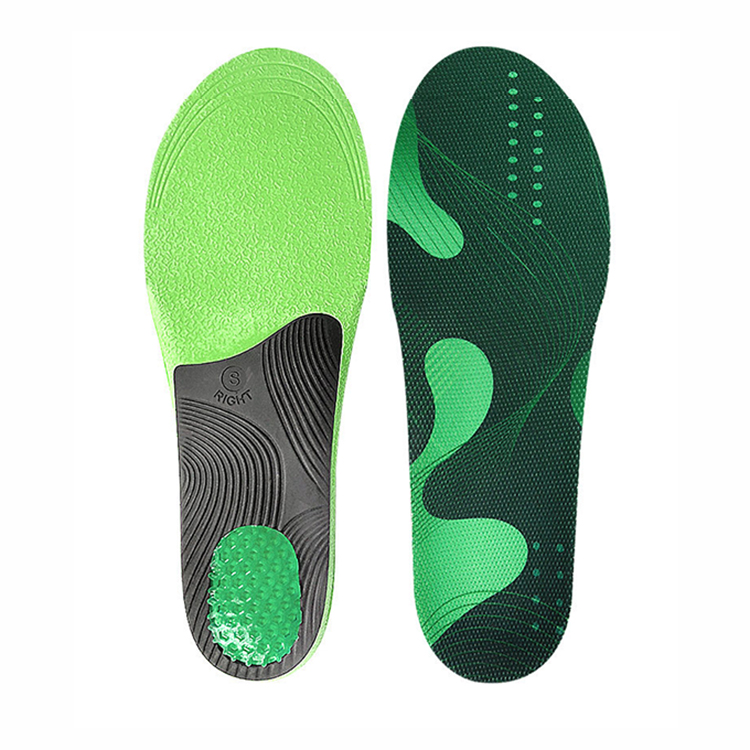
Gel Insoles: Targeted Shock Absorption & Medical Applications
Best for:
Medical insoles, cold climates, high-impact zones
Key characteristics:
- Excellent shock absorption
- Maintainssoftness in low temperatures
- combined with EVA or PU bases
Advantages for B2B buyers:
- Strong perceived comfort for end users
- Ideal for heel and forefoot pressure zones
- High value in medical and rehabilitation markets
Limitations:
- Higher material cost
- Not suitable as a full-sole structure alone
Typical use cases:
- Medical insoles
- Cold-weather footwear
- Heel and metatarsal cushioning systems
TPE Insoles: Stability & Durability for Heavy-Duty Use
Best for:
Heavy-duty work footwear, structural support applications
Key characteristics:
- Excellent elasticity and durability
- Strong shape recovery
- High resistance to deformation
Advantages for B2B buyers:
- Long product lifespan
- Strong arch stabilization
- Ideal for demanding environments
Limitations:
- Higher tooling and material costs
- Less soft than PU or Gel without hybrid designs
Typical use cases:
- Industrial footwear
- High-load orthotic systems
- Stability-focused designs
How Professional Buyers Select the Right Material
Experienced B2B buyers rarely choose a material in isolation. Instead, they evaluate:
- End-user profile: sports, work, medical, lifestyle
- Usage duration: short-term vs long-term wear
- Market positioning: entry-level, mid-range, premium
- Climate conditions: hot, cold, or variable
- Reorder expectations: seasonal vs continuous programs
In many cases, hybrid constructions (EVA + PU, PU + Gel, EVA + TPE) provide the best balance between cost, performance, and durability.
Why Engineering Support Matters More Than Material Names
Material names alone do not guarantee performance.
What truly matters is:
- Density control
- Compression and rebound testing
- Batch-to-batch consistency
- Application-specific engineering
This is why working with a manufacturer that offers in-house testing, material tuning, and OEM/ODM engineering support is critical for long-term success.
Final Thoughts for B2B Buyers
Choosing the right insole material is not about following trends—it’s about aligning material behavior with market needs and business strategy.
Brands and distributors who invest time in proper material selection:
- Reduce returns and complaints
- Improve customer satisfaction
- Build sustainable, repeatable product lines
For B2B buyers seeking long-term partnerships, material expertise is not optional—it is essential.